-
 Exhaust - Leaks
Hey y'all,
Been driving up and down the block in go-kart mode to surface any issues before I continue. I believe I have an exhaust leak (feels like I smoked a few cigarettes if I stand next to the engine for too long) and before going the route of either buying or building a DIY smoke leak detector, I tried spraying soapy water but I'm not quite sure if what I saw was because the surfaces were already hot and evaporating the liquid. Anybody with a good eye could take a look at these videos? Also, I know one of the recommended ways to detect an exhaust leak is sound but not sure if what I'm hearing is just the engine.
-
Not a waxer

If you’re blowing bubbles it’s blowing air.
Jeff
-
In a variety of leak scenarios I have used smoke to identify escape paths. I often get by with cigarette smoke (not mine). Incents might work.
Worse case, a bee-keeper smoke gun could help. The leak will blow the smoke away.
Alternatively with the engine off and cool, you could blow air up the tailpipe and water test for bubbles.
jim
-
You could use Seafoam Motor Treatment (https://seafoamworks.com/product/sea...fuel-additive/). I have only used this with my outboards, but it creates a lot of smoke which might be useful in tracking down leaks. Just a thought...
James
Mk4 Roadster #9974 - Picked Up 1/2021. Complete kit, Gen 2 Ford Coyote / TKX, IRS. Completed 9/2023
-
Well you did use gaskets. 
Mrk III, 331 stroker, Borla stack injection, T5, 3:55 IRS, Power steering and brakes. Kleiner body & paint
-

Originally Posted by
Jeff Kleiner

If you’re blowing bubbles it’s blowing air.
Jeff
Forgive my ignorance here, but it only seems like I'm blowing bubbles in the collector video, and not the headers one. For the headers, while there is movement of the soapy water foam, it looks to me like evaporation from the heat on the pipes. Since I felt very unsure I figured I would ask and also inquire about the sound.
Originally Posted by
J R Jones
In a variety of leak scenarios I have used smoke to identify escape paths. I often get by with cigarette smoke (not mine). Incents might work.
Worse case, a bee-keeper smoke gun could help. The leak will blow the smoke away.
Alternatively with the engine off and cool, you could blow air up the tailpipe and water test for bubbles.
jim
It does seem smoke is the best way to test this. I did read that air is not great because you could end up blowing particles into the cylinders.
Originally Posted by
rich grsc
Well you did use gaskets.
Plenty of people said they used the Remflex gaskets without issues, and yes, several also said that RTV worked for them. So, both being equal, I rather use the one without the mess. If there is a leak, I'm pretty use it's due to my torque spec. I used 20 ft-lbs on the bolts I could reach with a torque wrench but most I could only reach with a regular wrench so maybe they are not tight enough.
-
I have always used a small piece of ribbon that I would hold around the exhaust. The ribbon moves there is most likely a leak in that area.
-
Looks like both ball connectors are leaking. Wipe both ball sections with a very light smear of anti seize, throw about 3 washers under each nut and retighten.
20th Anniversary Mk IV, A50XS Coyote, TKO 600, Trunk Drop Box, Trunk Battery Box, Cubby Hole, Seat Heaters, Radiator hanger and shroud.
-
Post Thanks / Like - 0 Thanks, 1 Likes
-
Originally Posted by
elspanishgeek
I could only reach with a regular wrench so maybe they are not tight enough.
Did you make a click sound?
The videos, especially the collectors, look like leaks to me.
As stated, use a piece of paper, dollar bill, or ribbon around the headers. Leaks here typically sound like a noisy lifter. But it is hard to hear much on these cars. I never thought I would be a no gasket guy. But 8 years later I'll never go back.
-
Take a length of heater hose, put one end near your ear, the other in the area of the suspected leak. You will hear your answer.
20th Anniversary Mk IV, A50XS Coyote, TKO 600, Trunk Drop Box, Trunk Battery Box, Cubby Hole, Seat Heaters, Radiator hanger and shroud.
-
Here is another idea for checking for your leak. It gets you around working on a hot, running, loud engine.
Pick a cylinder. Rotate the engine over until the exhaust valve opens on that cylinder. Pull the spark plug out and blow compressed air into that cylinder. Now you can just listen for / feel the air escaping to find the leaks.
-
elspanishgeek I sent you a PM.
Steve
Texas Cobra Club-Austin
July 2009 FFCars Picture of the Month
FFR3542K, 347 C.I., EFI, T-5, 3-Link, Miata Front Sway Bar, Red with White Stripes
-
Post Thanks / Like - 1 Thanks, 0 Likes
-
Originally Posted by
elspanishgeek
Plenty of people said they used the Remflex gaskets without issues, and yes, several also said that RTV worked for them. So, both being equal, I rather use the one without the mess. If there is a leak, I'm pretty use it's due to my torque spec. I used 20 ft-lbs on the bolts I could reach with a torque wrench but most I could only reach with a regular wrench so maybe they are not tight enough.
Remflex gaskets work great but they have a lot of "squish". I would recommend torquing around multiple times to make sure all the bolts are still at torque after you have torqued the adjacent bolts. I use Remflex for header gaskets and I do 3 rounds of torque to the set amount on all the bolts.
-
Which is the reason I only use RTV, no going back repeatedly re-torquing the bolts. Also, once the gaskets start to leak, if you don't catch it soon they will be damaged and you buy another set.
Mrk III, 331 stroker, Borla stack injection, T5, 3:55 IRS, Power steering and brakes. Kleiner body & paint
-
"Take a length of heater hose, put one end near your ear, the other in the area of the suspected leak. You will hear your answer."
I second what Railroad suggested. This is the technique I used. I grabbed a piece of 1/2" hose about 3' long and listened along the joint. It did point out a leak that previously went unnoticed. I'm not sure if this has any bearing, but it only showed up after the engine was up to temp--cold, there was no leak. Fixing said leak is on my agenda for this rainy weekend.
Picked up kit 9/6/22. Complete Roadster Kit, IRS, 18" wheels, Forte 302, T5. First build. No auto mechanical experience and beyond excited to learn. Loaded with "Empty Nester" time and energy. Link to my build videos:
https://www.youtube.com/channel/UCgX...uCWGcelzGecm1Q
-
I have pretty annoying tinnitus so doesn't sound like this method would work for me (pun intended). I went ahead with the smoke test and it took a bit of "MacGyver-ing" at first trying to seal the hose through the exhaust exit but all I did was waste a couple hours. Finally, I realized that since I'm running carb I could just use the O2 port and seal the exhaust exit instead. That did the trick.
Here's the video of the passenger side: https://i.imgur.com/36c6nvx.mp4
Didn't see any smoke coming from the header-to-engine connection (Remflex gaskets + Stage 8s seemed to have worked), but I did get smoke on both header-to-collector couplings. I kept torquing those stover nuts but still have a leak. I'm up to ~40 ft-lbs on those. Does anybody have any advice here? I have the brass couplers to put after the stovers but as far as I understand, this is to keep the connection from loosening up over time.
Last edited by elspanishgeek; 08-29-2023 at 10:30 AM.
MK4 Roadster, BPE 347 + TKX (/w 0.68:1 5th gear), Holley 600 carb, 2015 IRS, 6168N power steering, 17-inch wheels, 12.88-inch Wilwood Brakes, hydraulic clutch /w throw-out bearing, custom stainless steel plumbing (PIA, do not recommend), custom dash, Russ Thompson dropped trunk, Boig tubes, several Breeze mods (front battery, seats, radiator, a few others).
Received: June 2021
First Go-Kart: August 2023
-

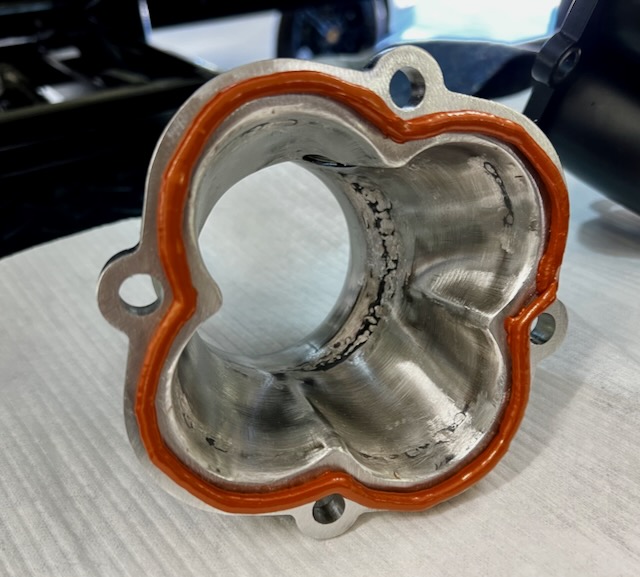
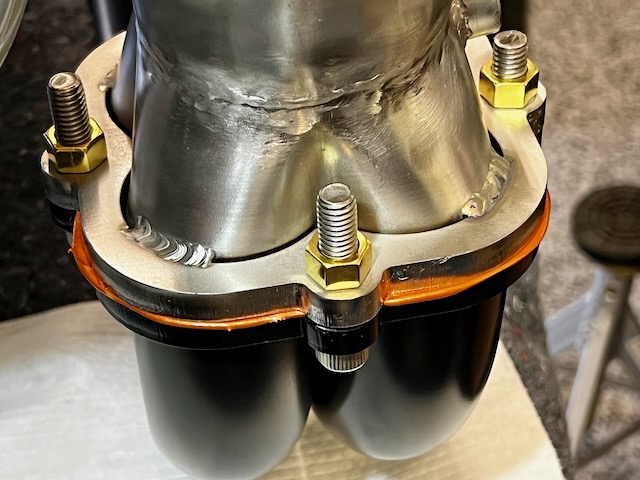
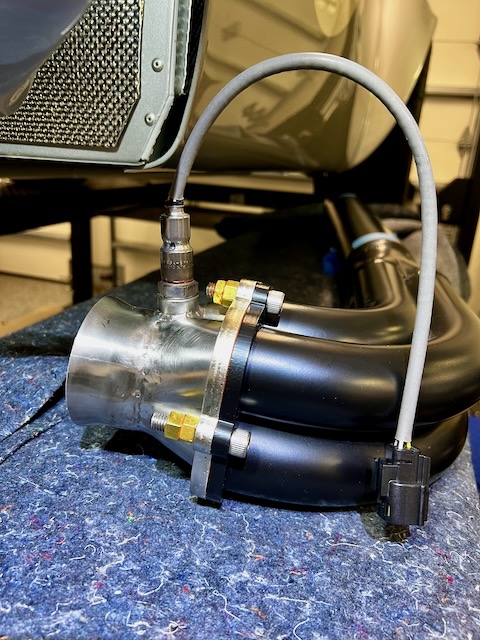
For the collector to pipe joint, I used only ultra copper RTV (no gasket). I'm not sure why they don't make it more clear on the label but after some digging I found a technical publication from Permatex outlining their recommended process to use it. They advise to not let the bead set up before assembling (as I've seen some people recommend). They recommend to lay a bead down and immediately assemble the joint, but only finger tight. Just enough so that the RTV just squeezes out from the joint. Let that set up for an hour, then torque to spec. After an hour, I removed each nut, added some ultra copper RTV on the threads of each bolt as a thread locker, torqued each nut, double-nutted it with another brass nut, and then broke off any of the RTV that had squeezed (both inside and outside) to clean up the joint.
MkIV Roadster build: Gen 2 Coyote, IRS, TKO600. Ordered 10/24/18. Delivered 1/29/19. Engine installed 8/8/21. First start 9/12/21. First go-kart 9/17/21. Off to paint 4/11/22. Back from paint 12/30/22.
Build thread here.
-
Post Thanks / Like - 1 Thanks, 0 Likes
-
Originally Posted by
JohnK
For the collector to pipe joint, I used only ultra copper RTV (no gasket). I'm not sure why they don't make it more clear on the label but after some digging I found a technical publication from Permatex outlining their recommended process to use it. They advise to not let the bead set up before assembling (as I've seen some people recommend). They recommend to lay a bead down and immediately assemble the joint, but only finger tight. Just enough so that the RTV just squeezes out from the joint. Let that set up for an hour, then torque to spec. After an hour, I removed each nut, added some ultra copper RTV on the threads of each bolt as a thread locker, torqued each nut, doubble-nutted it with another brass nut, and then broke off any of the RTV that had squeezed (both inside and outside) to clean up the joint.
Thank you for this quick response! I misspoke, I apologize, I meant that ball flange connection between the headers and the collector. The collector to pipe is not leaking, I'll edit my post.
lB7f9LXh.jpg
Last edited by elspanishgeek; 08-29-2023 at 10:33 AM.
MK4 Roadster, BPE 347 + TKX (/w 0.68:1 5th gear), Holley 600 carb, 2015 IRS, 6168N power steering, 17-inch wheels, 12.88-inch Wilwood Brakes, hydraulic clutch /w throw-out bearing, custom stainless steel plumbing (PIA, do not recommend), custom dash, Russ Thompson dropped trunk, Boig tubes, several Breeze mods (front battery, seats, radiator, a few others).
Received: June 2021
First Go-Kart: August 2023
-
Not a waxer
I'd try taking it apart and adding a healthy smear of high temp RTV (Ultra Copper or the like) to the ball to cup mating surface then reassemble and crank the heck out of it.
Jeff
-
Post Thanks / Like - 1 Thanks, 0 Likes
-
Hi Jeff,
In your experience, does that also help with the sidepipes "drooping" after a while? Does it provide enough adhesive force to minimize the torqueing in the joint itself?
Craig C
-
Ah, gotcha. I don't have any experience with the FFR ball flange headers but on my Gas-N headers with ball flanges I noticed that the female end of the ball flange was distorted where the O2 bung was welded in. I spent some time re-shaping the flange to make it as perfectly round as I could, and it sealed up fine. I'd start with checking to see if there is any visible out-of-roundness on the ball flange mating surfaces where the leaks are, and try to fix those.
MkIV Roadster build: Gen 2 Coyote, IRS, TKO600. Ordered 10/24/18. Delivered 1/29/19. Engine installed 8/8/21. First start 9/12/21. First go-kart 9/17/21. Off to paint 4/11/22. Back from paint 12/30/22.
Build thread here.
-
Post Thanks / Like - 1 Thanks, 0 Likes
-
Originally Posted by
Jeff Kleiner
I'd try taking it apart and adding a healthy smear of high temp RTV (Ultra Copper or the like) to the ball to cup mating surface then reassemble and crank the heck out of it.
Jeff
Perfect, I was thinking of using RTV here but didn't know if it could have some negative effects. I believe you were the first one to suggest using brass couplers here, was the intent that they would go after the stover nuts or replace the stover nuts completely?
Related question, is it possible to put the body on with the pipes install or do I have to take them out? If so, then I let it be for now until I workout all the kinks I'm finding while go-karting, since I'd have to take them off.
MK4 Roadster, BPE 347 + TKX (/w 0.68:1 5th gear), Holley 600 carb, 2015 IRS, 6168N power steering, 17-inch wheels, 12.88-inch Wilwood Brakes, hydraulic clutch /w throw-out bearing, custom stainless steel plumbing (PIA, do not recommend), custom dash, Russ Thompson dropped trunk, Boig tubes, several Breeze mods (front battery, seats, radiator, a few others).
Received: June 2021
First Go-Kart: August 2023
-
Not a waxer
Originally Posted by
elspanishgeek
Perfect, I was thinking of using RTV here but didn't know if it could have some negative effects. I believe you were the first one to suggest using brass couplers here, was the intent that they would go after the stover nuts or replace the stover nuts completely?
Related question, is it possible to put the body on with the pipes install or do I have to take them out? If so, then I let it be for now until I workout all the kinks I'm finding while go-karting, since I'd have to take them off.
Brass nuts with lock washers instead of the stovers.
Now, your "related question" indicates that the body is not on. If that's the case don't waste any more time worrying about sealing this joint because once the body is on and in it's proper position this connection have to be loosened and manipulated in 3 axis while fitting the sidepipes. After that has been finalized is the time to seal this joint and lock it down. When you take the body back off for body and paint leave the intermediate pipe between the header and sidepipe as is and simply remove the sidepipes at the 4 bolt flange. Once the exhaust is locked into place you might want to consider adding front hangers like I showed in your other post a month or so ago.
Jeff
-
Jeff, we don't disagree often, but I will never use a lock washer on an exhaust system. Almost 100% of the time you will find it loosens up over time, the lock washer will corrode quickly do to the heat, and will lose their tension. All that is need are the brass nuts, with a small smear of RTV
Mrk III, 331 stroker, Borla stack injection, T5, 3:55 IRS, Power steering and brakes. Kleiner body & paint
-
If you use RTV silicone on exhaust, especially ahead of the O2 sensor you might be wary of O2 sensor function. Racing motorcycles I had RTV damage the O2 sensor.
https://www.amazon.com/Permatex-8142...000AANXHC?th=1
https://community.cartalk.com/t/how-...-sensors/70388
Silicone with the acrid smell is not safe.
jim
-
Post Thanks / Like - 0 Thanks, 2 Likes
-
Jim, Permatex Ultra Copper RTV is the most commonly-recommended sealant for exhaust on most forums, and it states that it is sensor-safe right on the packaging.
https://www.amazon.com/Permatex-8187...59&sr=1-1&th=1
MkIV Roadster build: Gen 2 Coyote, IRS, TKO600. Ordered 10/24/18. Delivered 1/29/19. Engine installed 8/8/21. First start 9/12/21. First go-kart 9/17/21. Off to paint 4/11/22. Back from paint 12/30/22.
Build thread here.
-
Not a waxer
Originally Posted by
J R Jones
Open the Amazon link you attached and you’ll see that it says “sensor safe” right there. Maybe you were using bathtub caulk 
Jeff
-
Generally speaking, anything with a copper-based formulation should be sensor-safe (but check the label). This is why copper-based anti-seize exists (that's what you want to use on the O2 sensor threads, for example).
MkIV Roadster build: Gen 2 Coyote, IRS, TKO600. Ordered 10/24/18. Delivered 1/29/19. Engine installed 8/8/21. First start 9/12/21. First go-kart 9/17/21. Off to paint 4/11/22. Back from paint 12/30/22.
Build thread here.
-
Jeff, John, no one in this thread mentioned sensor safe, so I included the Amazon ad and product label illustrating that characteristic. For obvious reasons automotive sealants have evolved to protect sensors and sell more product.
It was not always that way, one of the first sensor safe Permatex sealants was marketed as "Ultra Black". It is not quite as black as non-safe silicone, and lacks the acrid odor.
Back in the 90's I developed a personal watercraft for Mercury. We sealed the pump housing to the FRP hull with black RTV silicone. The service department could not break the seal to get the pump off the fiberglass, the vinyl ester glass broke first. Consulting Loctite they recommended the (sensor safe) Ultra Black blend that has less bond strength. End of the service problem.
My adhesive drawer has both blends because I have applications that need the higher bond strength. Caveat Emptor, not all silicone is sensor safe.
In other Mercury experience, the non-safe silicone is not recommended for electronic applications. It is not conductive, it is somewhat corrosive.
jim
Last edited by J R Jones; 08-29-2023 at 03:32 PM.
-
Post Thanks / Like - 0 Thanks, 1 Likes
-
I thought I'd chime in here. While this won't help with the original question, I thought it was relevant.
I'm running a Ford Racing 302 with Sniper EFI and I've been dealing with a bumpy idle, idle surging at stoplights, and a bit of a roughness in the sound while accelerating below 1500 RPM's. No tuning adjustments seem to have any affect. I decided to look for exhaust leaks and found a very small one at the ball joint (using a rubber hose as a stethoscope). I separated the joint, cleans the ball and socket and smeared a thin layer of RTV. I then reassembled it in place using larger and upgraded hardware, and I doubled up the washers. After about 10 miles the tuning problems completely went away, and now 200 miles later, it's still running perfectly with a smooth idle and acceleration.
Its amazing how small a leak throws off the tuning on these EFI units.
I just thought I'd share my experiences.
Picked up kit 9/6/22. Complete Roadster Kit, IRS, 18" wheels, Forte 302, T5. First build. No auto mechanical experience and beyond excited to learn. Loaded with "Empty Nester" time and energy. Link to my build videos:
https://www.youtube.com/channel/UCgX...uCWGcelzGecm1Q


 Thanks:
  Likes:


 Reply With Quote

