-
standard or hydraulic clutch?
Hey Y'all - anyone please weigh in on this if you have an opinion or experience.
My build is the Daytona coupe with Coyote gen 3, quicktime bell housing and Tremec TKO transmission. Previously I had a series 1 FFR cobra with the old mustang 5.0 from the 90's and clutch from that same car. It had a slightly heavy feel but was manageable so I thought I'd keep the current daytona build simple and just do the unassisted basic clutch setup.
However, now having second thoughts and wondering if hydraulic clutch is the way to go.
Opinions on clutch weight, feel and engagement please? How complicated is it to do hydraulic with my setup?
If hydraulic clutch is the way to go, please advise as to a simple low cost manufacturer or kit/part #.
I appreciate the help!
-
Hydraulic all the way. I used cable at first and the pedal was way too heavy.
https://www.moderndriveline.com/shop...-kit-sbf-bell/
-
Depends on your use and type of clutch. Hydraulic clutches come in two primary varieties, a slave cylinder style that is mounted external to the bellhousing and a hydraulic T/O bearing style. The former is easier to service and the latter requires splitting the trans and engine to access it. The hydraulic T/O bearing has a packaging advantage when space constraints are an issue and both style hydraulic clutch release systems are easier to install on a scratch built application. The downside of using a hydraulic release is they are not as quick as a mechanical release and the hydraulic T/O style is not compatible with all style clutches. So if you're wanting to bang shifts like a drag racer you're not going to be happy with a hydraulic release nor a stock TKO. However, the TKO slow shifting can be fixed -- not so much the slow hydraulic release. So for a quick acting clutch go with a mechanical release -- either linkage or cable.
But if you're only interested in a street driven car, any type clutch release will work fine and you'll learn how to shift the TKO. As for which style has the easiest pedal -- that's simply a matter of mechanical advantage and each style of release can be made to operate with greater leverage but it's simpler to adjust the leverage on a hydraulic release via a M/C change.
Dart Little M 406" SBC 800 HP N/A & 1,100 HP on nitrous, 2-spd Powerglide with trans brake, 6,000 RPM stall converter, narrowed Moser 88 3.90:1 spool with 35-spline gun-drilled axles & Torino bearings, custom parallel four-link, custom tube chassis & roll cage NHRA certified for 8.5-sec (only two FFR Hot Rods have this cert).
33 Hot Rod Super Pro Drag Racer Build:
33 HR NHRA Cert Roll Cage Build
-
Post Thanks / Like - 0 Thanks, 1 Likes
-
Thanks for the link - I'm going to look into that!
-
Thank you. That's a lot of info to digest. This car will be 80% street and 20% track. I'd like reasonably quick shifting but not have my left leg hating the car....
Sounds like you can't really get max comfort and max quickness in the same set up- please correct me if I'm interpreting this wrong.

Originally Posted by
NAZ

Depends on your use and type of clutch. Hydraulic clutches come in two primary varieties, a slave cylinder style that is mounted external to the bellhousing and a hydraulic T/O bearing style. The former is easier to service and the latter requires splitting the trans and engine to access it. The hydraulic T/O bearing has a packaging advantage when space constraints are an issue and both style hydraulic clutch release systems are easier to install on a scratch built application. The downside of using a hydraulic release is they are not as quick as a mechanical release and the hydraulic T/O style is not compatible with all style clutches. So if you're wanting to bang shifts like a drag racer you're not going to be happy with a hydraulic release nor a stock TKO. However, the TKO slow shifting can be fixed -- not so much the slow hydraulic release. So for a quick acting clutch go with a mechanical release -- either linkage or cable.
But if you're only interested in a street driven car, any type clutch release will work fine and you'll learn how to shift the TKO. As for which style has the easiest pedal -- that's simply a matter of mechanical advantage and each style of release can be made to operate with greater leverage but it's simpler to adjust the leverage on a hydraulic release via a M/C change.
-
I like and use hydraulic setups. But I wouldn't say the external setup is night and day difference in effort compared to a good cable that's properly installed. That means replacing the somewhat marginal kit provided cable with a much higher quality Ford Performance cable. Hydraulic can be a little easier and smoother, but not a major difference and I've had both. Part of the effort is related to which clutch you chose. Some go high HP on clutches and at least for the single disk setups, can result in a heavier than usual pedal. If going external, it also highly depends on using the optimal master cylinder/slave cylinder combination. That too can make a big difference. Once properly setup and bled, I've never noticed any difference in speed, feel, whatever, between cable and hydraulic.
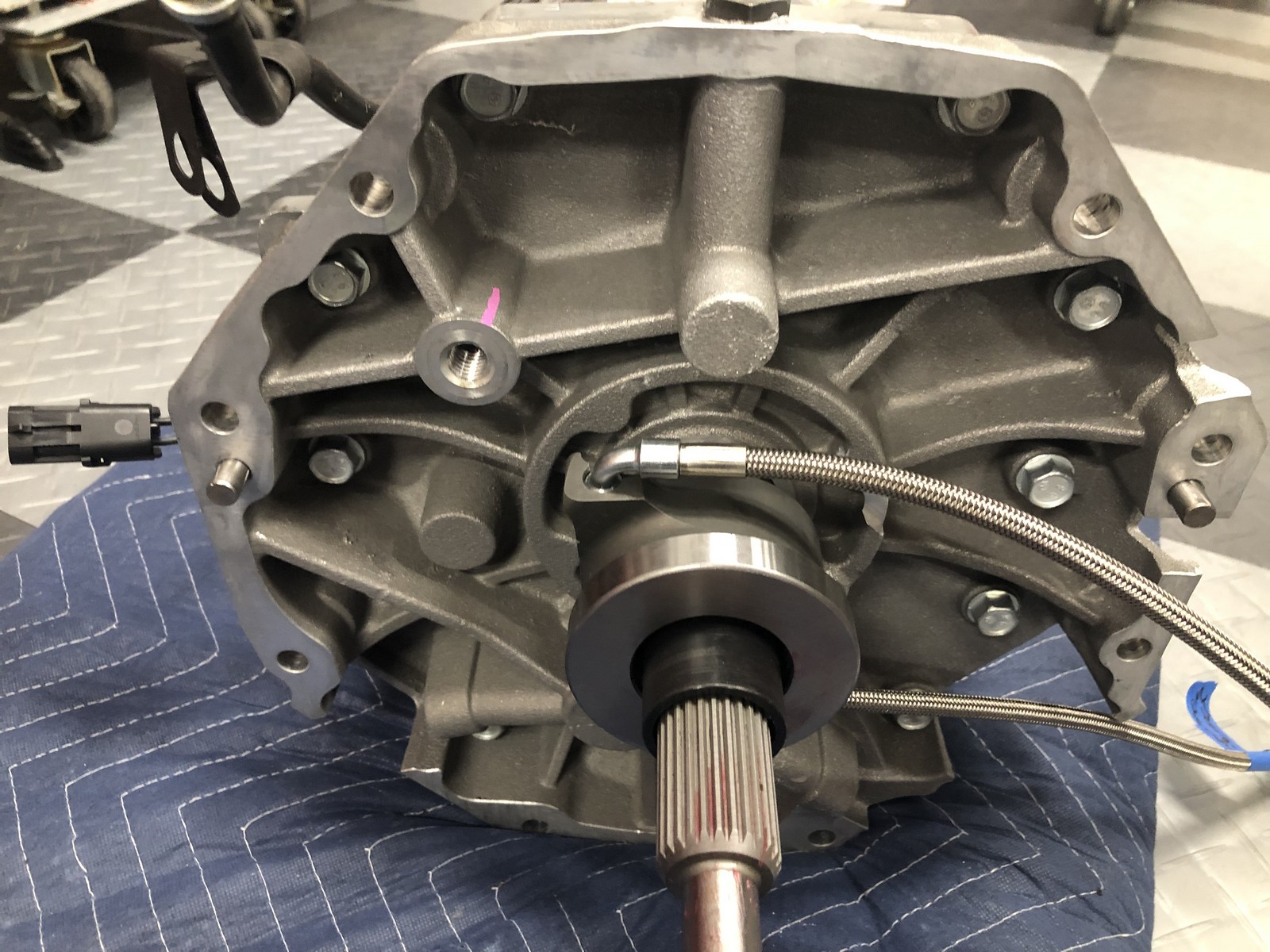
I installed a Tilton hydraulic releasing bearing (HRB) in my Gen 3 Coupe build. Cheaper, easy to install, self-adjusting (like disk brakes) and effort is significantly reduced over either cable or external slave setups. I'm pleasantly surprised every time I drive it. I know there are concerns about reliability, having to pull the engine or trans to service, etc. Which are legitimate questions. But you also have take things apart to service the clutch, flywheel, traditional TOB, etc. I decided to give it a shot. So far, couple thousand miles in and really happy with it. Most DD's still using a traditional clutch (they're getting less and less) use this setup. I see Factory Five is also offering as an option now.
Last edited by edwardb; 11-23-2020 at 07:28 AM.
Build 1: Mk3 Roadster #5125. Sold 11/08/2014.
Build 2: Mk4 Roadster #7750. Sold 04/10/2017.
Build 3: Mk4 Roadster 20th Anniversary #8674. Sold 09/07/2020.
Build Thread and
Video.
Build 4: Gen 3 Type 65 Coupe #59. Gen 3 Coyote. Legal 03/04/2020.
Build Thread.
Build 5: 35 Hot Rod Truck #138.
Build Thread. Sold 11/9/2023.
Build 6: Mk5 Roadster 30th Anniversary #11,258.
Build Thread.
-
Originally Posted by
BigShooter
Thank you. That's a lot of info to digest. This car will be 80% street and 20% track. I'd like reasonably quick shifting but not have my left leg hating the car....
Sounds like you can't really get max comfort and max quickness in the same set up- please correct me if I'm interpreting this wrong.
What makes a clutch release easy to push is directly related to the pressure plate spring pressure and the mechanical leverage of the release mechanism. There is no magic bullet that will give you fast acting and soft pedal. And there is no magic in a hydraulic release. A mechanical release and a hydraulic release both provide mechanical advantage to make it easier to compress the springs on the pressure plate, they just do it in a different way. And it starts with the pedal ratio.
What makes a hydraulic release slow is the small passage ways the hydraulic fluid has to pass through. When you kick the clutch pedal hard and fast the fluid acts to resist the speed of the pedal because it has such small ports and hose to travel through. Acts much like a shock absorber, the hydraulic fluid can only flow through the small ports so fast. This won't be noticed by most drivers but if you're used to really banging through the gears you will definitely be disappointed in how slow a hydraulic release is. A mechanical release has no speed restraint issues.
Dart Little M 406" SBC 800 HP N/A & 1,100 HP on nitrous, 2-spd Powerglide with trans brake, 6,000 RPM stall converter, narrowed Moser 88 3.90:1 spool with 35-spline gun-drilled axles & Torino bearings, custom parallel four-link, custom tube chassis & roll cage NHRA certified for 8.5-sec (only two FFR Hot Rods have this cert).
33 Hot Rod Super Pro Drag Racer Build:
33 HR NHRA Cert Roll Cage Build
-
I found a little cheaper version of the slave type. Full disclosure, I haven't driven it yet extensively but has been working well during tuning sessions. Just thought I'd give an alternative.
https://www.dazecars.com/dazed/Test3550bracket.html
FFR #4402 MKII Supercharged 308 445 RWHP Sterling Grey W/ Black Sapphire Stripes, Purchase 8/22/2008 Sold 12/04/2018
FFR #8249 MK IV "Milano" Kit purchased 10/5/2018 - Graduated with 3.27 IRS, Multiport, Fuel Injected Supercharged 347 Big bore with Coil On Plug running Holley HP engine management, 576 RWHP, 510 Torque
https://thefactoryfiveforum.com/showthread.php?29980 Milano thread
-
Originally Posted by
edwardb
I see Factory Five is also offering as an option now.
I think the reason behind this is that BluePrint switched to hydraulic TOB earlier this year in their solutions.
Build thread
FFR mk4 roadster complete kit, 347 cu in carbed BluePrint engine, TKO600, IRS, power steering, ordered Jan2020, delivered 3/25/20, titled 8/23/20, finished 07/17/2021,
graduated 10/06/2021



 Thanks:
  Likes:


 Reply With Quote
